I requested my data from Facebook - this is what I got to see
Facebook knows what you did last summer. And much more than that. Most people probably know that the social media platform has a lot of information about us, but the question is whether we really understood the scope—and what the data can be used for.
I scroll and scroll but the information never wants to end. I have downloaded all the data I have shared to Facebook. It's fascinating reading that stretches back to the early days of the platform. Status updates that today feel like they were written by another person, and private posts on friends' walls that could then be read by anyone. For me, who now mostly uses Facebook to wish friends on their birthdays, it's almost a little surreal to see how carefree and open I used to share private information.
Why is it so hard to quit social media?
Many of us know that we are mapped in detail via social media. And that our personal data can be used to influence us to buy a certain product - or take a stand on a politically charged issue. Nevertheless, we continue to use the services. Why?
Today it is possible to request one's data, i.e. everything one has shared with oneself, from several social media platforms. I choose Facebook because it is still undoubtedly the most used social network . Downloading your data from Facebook is not very difficult and something that anyone with a Facebook account can do . The procedure is also surprisingly fast with an educational description of how to proceed and also provides a clear overview of all data.
How exciting can an "established adult life" be?
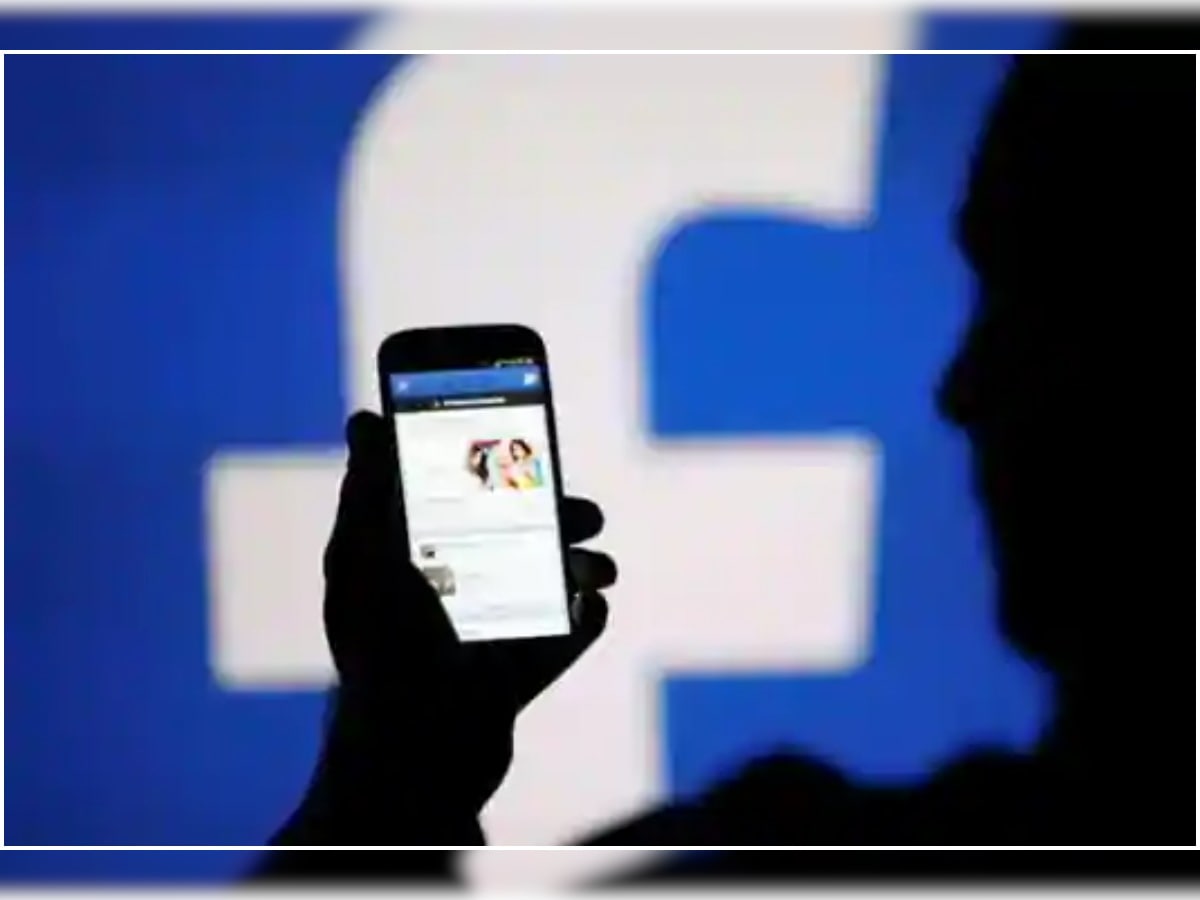
It's no surprise that Facebook has information about my status updates, posts, which groups I'm a member of, and what I've liked. But when I delve into all the information, it becomes clear that I am extremely carefully mapped.
Some things are surprising, for example I thought I never clicked on ads in my feed but clearly see that is not true as the ads I interacted with are saved. All my searches on Facebook are also among the information. Every little like or comment on friends' - and friends' friends' - posts is saved. I also see that Facebook has all my contacts, i.e. my entire phonebook saved, and it feels a little uncomfortable. There is also exact information about my logins and logouts and which IP address they came from.
Facebook divides all users into different peer groups, that is, groups of people who have certain characteristics or backgrounds in common. My group is called "established adulthood". It may not sound super exciting - but the reading is captivating.
How Facebook came to the conclusion that I would be interested in the First Thessaloniki Letter or a goth rock band from Lithuania is a mystery.
I find a list of several hundred keywords that should describe my advertising interests and that include everything from movie titles, car brands and seasons to places and cuisines. Many of them point to things that I am interested in or at least may have Googled at some point. But the list also contains words that I have definitely never typed into any search field or otherwise shown interest in. How Facebook, for example, came to the conclusion that I would be interested in First Thessaloniki Letter or Siela, which turns out to be a goth rock band from Lithuania, is a mystery.
One category in the compilation that is missing for me is location information. That's because I have location services turned off for Facebook, otherwise the company would have also had exact information about where my phone is, either always or when I'm using the app depending on my settings on the phone.
Tracked - on online privacy with Parisa Amiri, watch the whole series on Youtube.
The world's most effective advertising machine
What is not visible in the downloaded information is that the company also keeps track of much of what you do outside the platform. For example, it is not possible to surf the Internet for many minutes before you are interrupted by a pop-up window that wants you to accept cookies. If you agree, a file with information about your visit to the website is saved on your computer. That information can then be read by other websites and means, for example, that Facebook can learn if you have searched for flights or if you have put a pair of gym shoes in a shopping basket on a certain site. In this way, the ads that appear in your Facebook feed can be adapted to your browsing behavior .
Facebook also markets something they call the Facebook Pixel to advertisers and businesses. It is similar to cookies, but is more advanced and offers more possibilities. A company or organization places a piece of code on its website that records what the visitor does on the site. If the visitor has Facebook or Instagram, the company or organization can then reach them directly on the relevant social media with customized advertising or other content.
Through the Facebook pixel, advertisers can also create their own target groups on Facebook with users who have been on their website, and measure and study how they receive and perceive the advertising.
In addition, Facebook has full control of the type of device you use, the company that manufactured it, your operating system , mobile and internet provider, your phone number and even how strong your battery is.
Emma Blom,
social media expert.
It's all of this combined - who are your friends and how you interact, which groups you like, where you are, what you search for online - and much more - that makes Facebook commonly known as the world's most effective service for advertising and marketing. For sure, Facebook is still a social network, but it is even more of an "advertising machine" as Emma Blom, social media expert and owner of the media agency Social industries, puts it.
It's not difficult for Facebook to figure out what kind of car you have. You may be inside Volvia three times a year and then it is reasonable to believe that you have a Volvo. If you surf intensively for a short period on H&M's site and search for shorts, it is reasonable to believe that you will buy a pair of shorts. What we do online reflects what we do physically, she says.
A wet dream for business
By analyzing all of your activities on the site, information from the companies that use Facebook technology, along with everything you provide yourself, Facebook's algorithms draw a portrait of you. Then you are placed in different target groups with special interests or family relationships.
It is not difficult for Facebook to figure out what kind of car you have. You may be inside Volvia three times a year and then it is reasonable to believe that you have a Volvo.
EMMA BLOM
The target groups are used by third-party companies that buy advertising space from Facebook and that reach you in your news feed with advertising tailored just for you. Then add that Facebook also owns the social media service Instagram and the apps Messenger and Whatsapp and you get a data giant without equal in the world.
A data giant that mapped several billion users: their interests, age, family relationships, occupations, where they are, who they communicate with, how long they read a post, what pictures they look at, which friends they socialize and chat with and which pages they visit outside of Facebook. A wet dream for any company that wants to reach out with their products or services.
Companies that have paid Facebook to advertise want you to buy their products or receive their ads in a positive way, and that probability increases if Facebook knows a lot about you, says Emma Blom.
It is therefore not only Facebook that has access to information about you, but also advertisers. However, Facebook states that they do not share information that can be used to identify you, such as name, email address or personal and address information.
"As individuals we are completely meaningless"
Emma Blom, who herself buys advertising on Facebook for clients, also emphasizes that it is precisely the target groups and overall patterns of the users' interests and lifestyles that are important for Facebook and the advertisers, not who the users are as individuals.
- As individuals, we are completely meaningless, she says and describes how it happens when companies buy advertising on the platform:
- I send a request to Facebook where I say, a little simplified, "here is my ad about cat food, I would like to show it to as many cat owners as possible in Gothenburg between the ages of 35 and 45". OK, says Facebook and then they target the ad to who they think are cat owners in that area based on 1,000s of parameters, she says.
Do you like the Beatles? Then you probably like expensive cars
David Sumpter is professor of applied mathematics at Uppsala University and author of the book "Calculated - the truth about the algorithms that control the world" . He tells us that Facebook's algorithms, which control what appears in your news feed and which ads you are exposed to, are significantly more advanced than many of us might think. Based on your interests, the algorithms can draw conclusions about you.
David Sumpter,

Professor of Applied Mathematics.
- It can be about what kind of music you like or what movies you like, and that there is a correlation between those things and other interests. For example, those who like The Beatles are often middle-aged men, and middle-aged men are often interested in expensive cars, he says.
Facebook has also been noticed for taking on an ever-increasing role in politics and election campaigns. Because just as companies can reach potential customers, political parties and opinion leaders can reach potential voters.
- For example, a party can target everyone who is interested in boats, and then they raise some type of tax issue regarding boat owners and send political messages to them, it is very effective, says David Sumpter.
Algorithms can reinforce the divides
But the very thing that made Facebook so successful and profitable, i.e. the ability to place users in different target groups where the users have certain things in common, such as sexual orientation, gender, origin or other factors, can also be problematic according to David Sumpter. It is programmed algorithms that control what we see in our feeds, but an algorithm is not neutral but is colored by the person who created it. This means that algorithms can amplify differences and perpetuate prejudices when it determines what we are exposed to or not.
This is privacy – and that's why you need to care
There is more and more talk about personal integrity and the risk of it being violated on the internet. But what does privacy really mean and why is it important to protect it?
- For example, there is a lot of advertising on Facebook that is based on preconceived notions. There are people who get ad after ad about fast loans and internet casinos, time and time again. It will be a reinforcement of the inequalities that exist in society, says David Sumpter.
Apps and quizzes share your data
There are more than Facebook and the platform's advertisers that collect your data. Mobile apps, many of them free to download, want access to your Facebook information when you install them. One example is the popular travel and review app Tripadvisor. It has even come to light that Tripadvisor and many other apps shared the information about their app users with Facebook, even if the users didn't even have a Facebook account . The same applies to Spotify. Among other things, the apps have shared information about what kind of phone the users have and where they are geographically.
Are you perhaps one of those who use your Facebook login for other services such as Spotify or Netflix because it feels convenient? Then it's good to be careful, because it means that you are giving the company access to the use of your Facebook data.
Similarly, be careful with various games, quizzes, personality and comparison tests. Sure, it can be hard to resist testing your skills against your friends or seeing which soccer player or movie star you share characteristics with. But most of these tests are created for a single purpose - to take your data to make an even clearer profile of you. In addition, many of these companies make a living by selling the data on to the highest bidder.
Previously, the companies could also get information about all your friends. A possibility that Facebook claims to have stopped in 2015.
Tightening after the Cambridge Analytica scandal
The data collection became an attention-grabbing issue in connection with the so-called Cambridge Analytica scandal in 2018.
The data analytics company created seemingly playful personality tests on Facebook to gain access to information about users. But it wasn't just those who took the test whose information the company gained access to, but also information about their friends. In total, nearly 87 million Facebook users' data was collected. The information was then used to create detailed profiles of users where their views and what upset and engaged them were mapped.
Peter Münster,
Nordic Communications Manager
at Facebook.
Users were then targeted with carefully tailored material to try to get them to vote for Donald Trump in the 2016 US presidential election. The data was also sold for use in the Brexit campaign in the UK. It became a clear example that we can never be completely sure how our data is used and for what purposes.
Peter Münster, Facebook's head of communications in the Nordics, describes the Cambridge Analytica scandal as a "wake-up call".
- It led to a rather radical self-examination on our part. Who are we? What kind of technology have we built and what responsibility do we have? And after that, there was a rearrangement of our priorities, he says.
After this, security and privacy came into focus, according to Peter Münster. He also says that in 2018 and 2019, Facebook invested $6.7 billion in user and system security.
- Transparency in how our data is used must also increase, among other things, a tool has been launched where each user can see what data about them other websites and apps share with Facebook, and where users can also turn off future data sharing. The most important thing is that people have control over their data, says Peter Münster.
Hands holding a mobile phone, the screen shows different apps.
That's why the apps want your data
Most of the mobile apps are free to download. But that doesn't mean they're free. In a way, we pay with our data. By collecting information from different apps, companies can create a detailed picture of you, your health, your sexual orientation and your political views. Do we have to skip the apps to avoid the mapping?
Facebook fined billions after Cambridge Analytica scandal. And even if they have changed their routines and become more open and educational about how our data is used, we must have a vigilant approach to the companies behind social media, says David Sumter. That a company sits on such gigantic amounts of data about us without access from outsiders is a problem.
Keeping people's data in order is absolutely fundamental to our relationship with them.
DAVID SUMTER
— It is not good that there is a company that has so much information about us without us knowing what they are doing with the data. In addition, it is a private company and thus there is a profit-making interest in how they use our data, he says.
According to Peter Münster, it is absolutely crucial for Facebook's future that the company can live up to what David Sumter is up to.
- The fact that we have people's data in order is absolutely fundamental to our relationship with them. In this crisis of confidence, it is important for us to point out that we must, of course, live up to it, he says.
As a user, you have three choices
I was aware that Facebook knows a lot about me and all its users before I downloaded my data. But the level of detail in the mapping amazed me. The finesse in Facebook's business model and how our data is the basis for making us attractive targets for everything from advertisers to opinion leaders became obvious.
We can probably just forget that Mark Zuckerberg would suddenly one day manage to run the world's largest social network as some kind of philanthropic activity. Facebook will always collect data about you, no matter how thorough you are. You can't have full control, but you can have better control. The expression “if something is free, you are the product” feels relevant.
So as a user, you have three choices:
Log out of Facebook.
Pretend it's raining and continues using the service as you always have.
Try to take control of your Facebook data as much as possible.
I chose the latter. Below are several tips on how to go about reducing the amount of data you provide to Facebook and thus gain more control over how your information is used.


Comments
Post a Comment